フィールド日記

2026年03月
2026.03.13
ヘビイチゴ
「共生の森」の近くでヘビイチゴが咲いています。落葉樹林の林床や草地に生えるバラ科の多年草です。普通種ですが、近縁のヤブヘビイチゴやその雑種と紛らわしい個体もあるので注意が必要です。
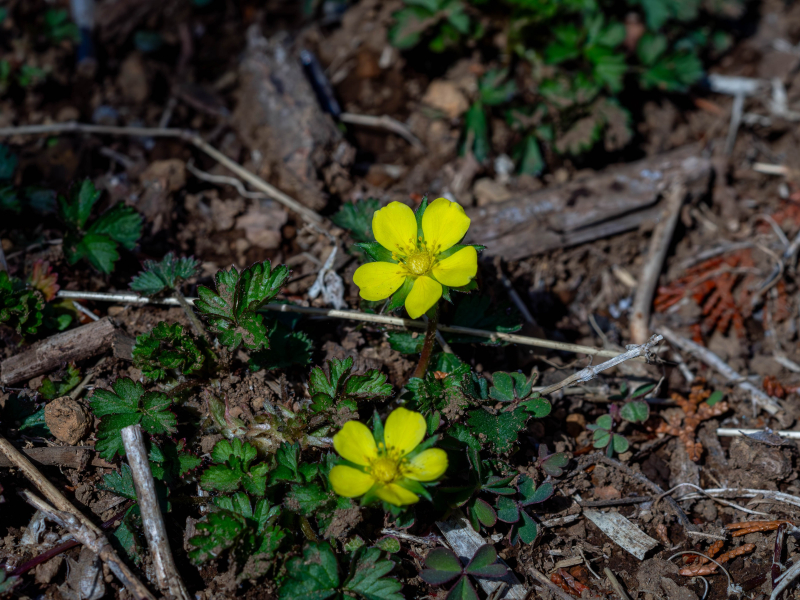
"Hebiichigo" plants are in bloom near the "Kyosei-Forest (共生の森)." They are perennial plants in the Rosaceae family that grow on the floors of deciduous forests and in grasslands. Although this species is quite common, care is needed when identifying it because some individuals closely resemble a relative species called "Yabu-Hebiichigo," as well as hybrids between the two.
2026.03.10
キジムシロ
クヌギ林の林床でキジムシロが咲いています。草地や明るい林床に生えるバラ科の多年草です。不二聖心では2月中から咲き始めます。和名は、花の後に放射状に広がる葉を、雉(きじ)が休む筵(むしろ:わらなどを編んで作った敷物)に例えたものです。
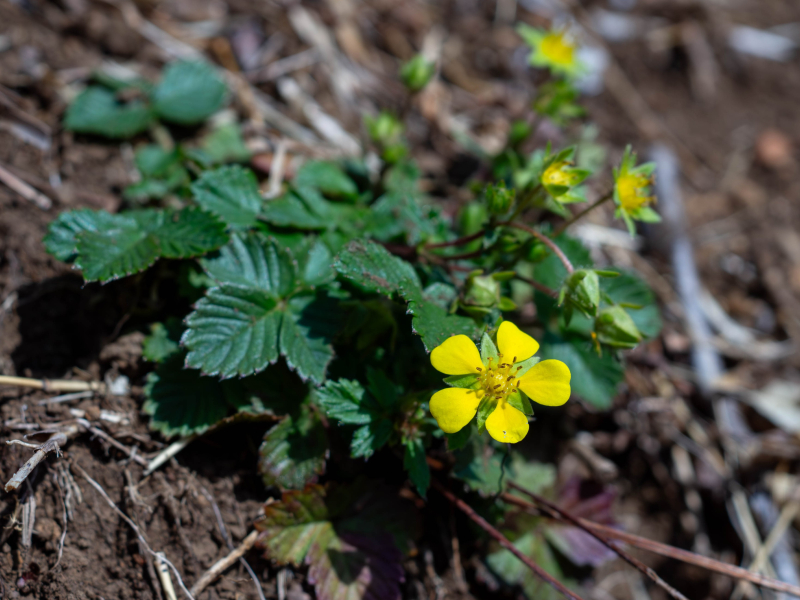
“Kijimushiro” plants are in bloom on the forest floor of the Japanese chestnut oak woodland. They are perennial plants in the Rosaceae family that grow in grasslands and on bright forest floors. On our campus, they start to bloom in February. The name means “pheasant's straw mat” and comes from the shape of leaves that spread outward radially after their flowering period.
2026.03.06
コモチシダ
聖心坂でコモチシダが見られます。日当たりのよい崖地に見られるシシガシラ科の常緑のシダ植物です。和名は大きな株では葉の表面に無性芽がつくことに由来します。胞子によって殖えるほか、無性芽が地面に落ちて新たな個体となることで仲間を殖やすことができます。
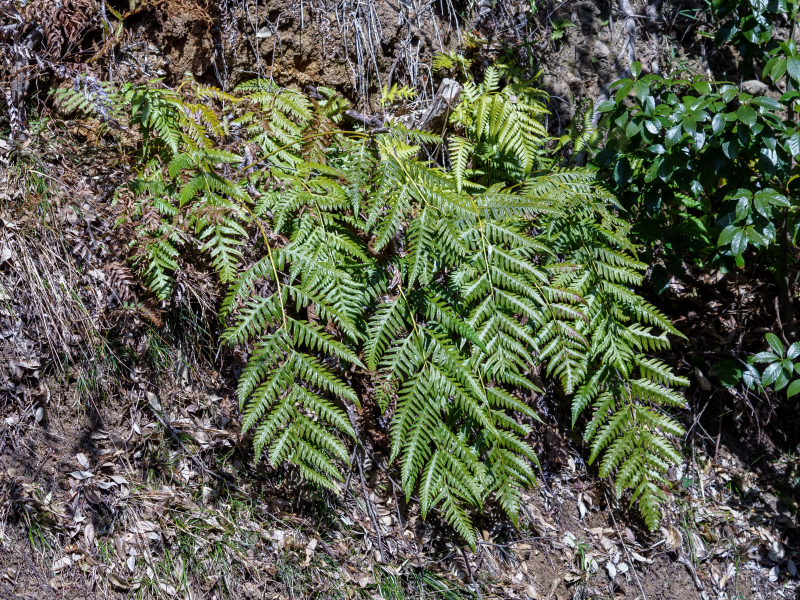
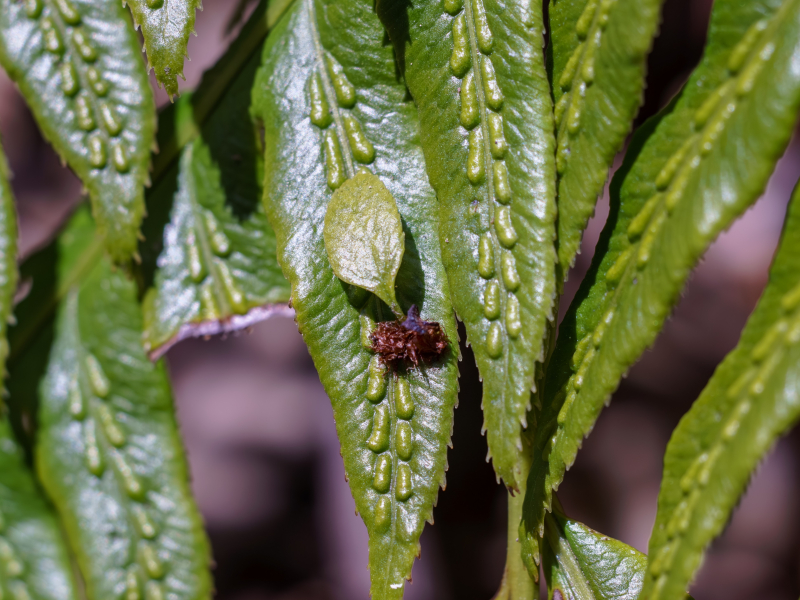
"Komichisida" ferns are growing along the "Seishin Zaka." They are evergreen ferns in the Blechnaceae family and are commonly found on sunny cliffs. The name comes from the fact that mature plants produce gemmae on their leaves. In addition to reproducing by spores, they can also spread when these gemmae drop on the ground and grow into new individuals.
2026.03.03
ヒメウズ
聖心坂でヒメウズが咲いています。道端などに生えるキンポウゲ科の多年草です。和名のウズはトリカブトを意味し、葉や果実がトリカブトに似ていていることに由来します。
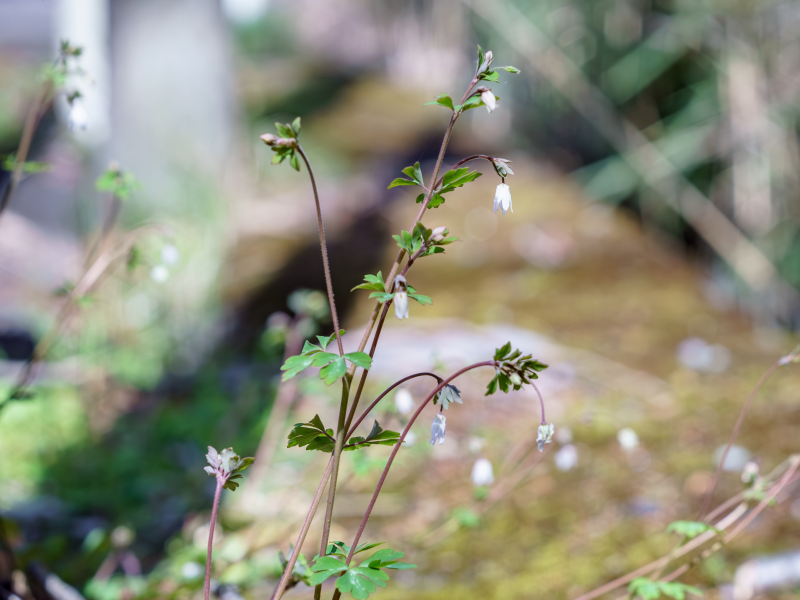
"Hime-Uzu" plants are in bloom along the "Seishin Zaka." They are perennial plants in the Ranunculaceae family that are commonly found growing along roadsides. The name "Uzu" refers to a plant called "Torikabuto," as the leaves and fruits of “Hime-Uzu” resemble those of that plant.
- 1 / 1