〇お知らせ〇
同じ内容をインスタグラム「不二聖心女子学院フィールド日記」(クリックするとインスタグラムのページが開きます)にも投稿しています。より高画質な写真を載せていますのでぜひフォローしてください。

フィールド日記

シダ植物

2025.03.07

ヘラシダ

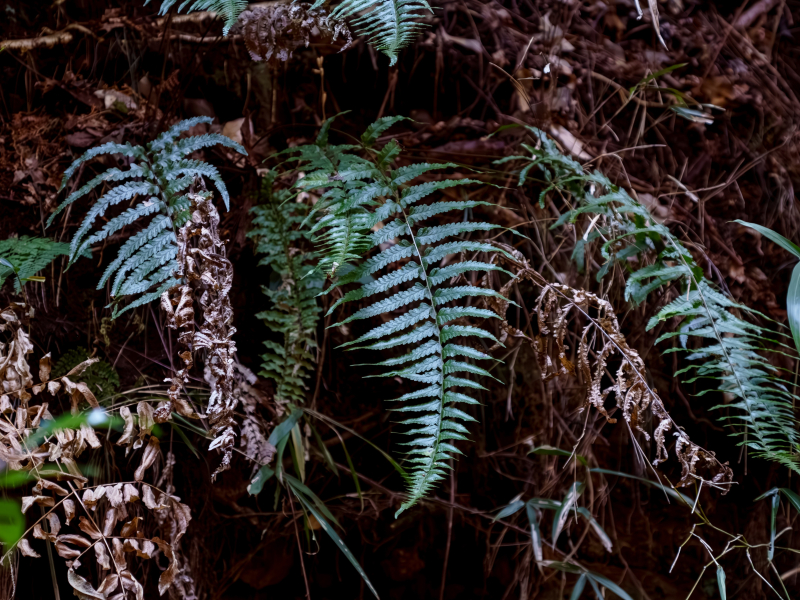
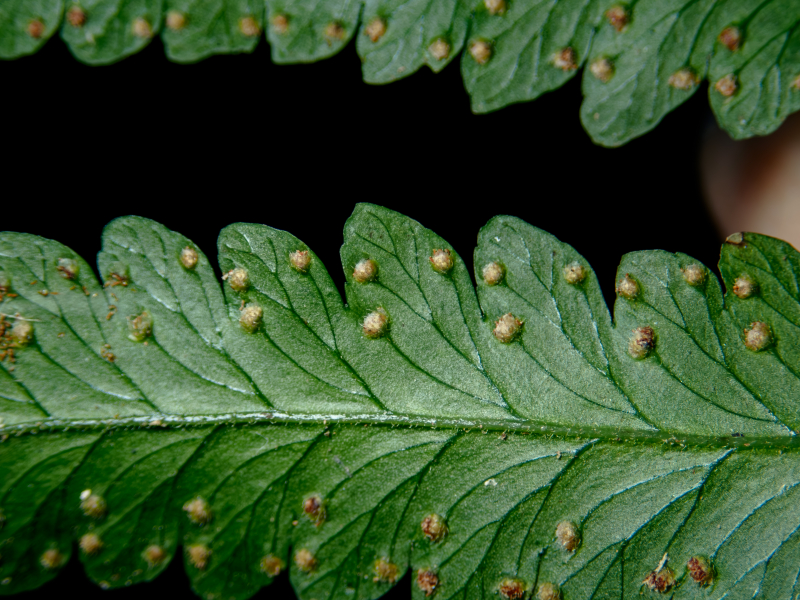
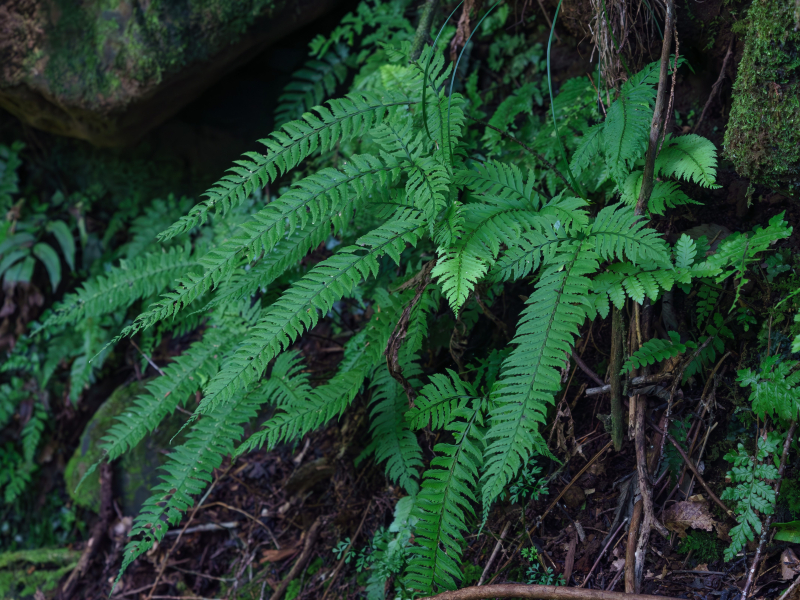
 ヒノキ林でヘラシダが見られます。樹林内の湿った崖などに見られる常緑のシダ植物です。葉の裏面には線形の胞子のう群が見られます。葉は切れ込みのない単葉で、和名はこの葉の形をへらに見立てたことに由来します。
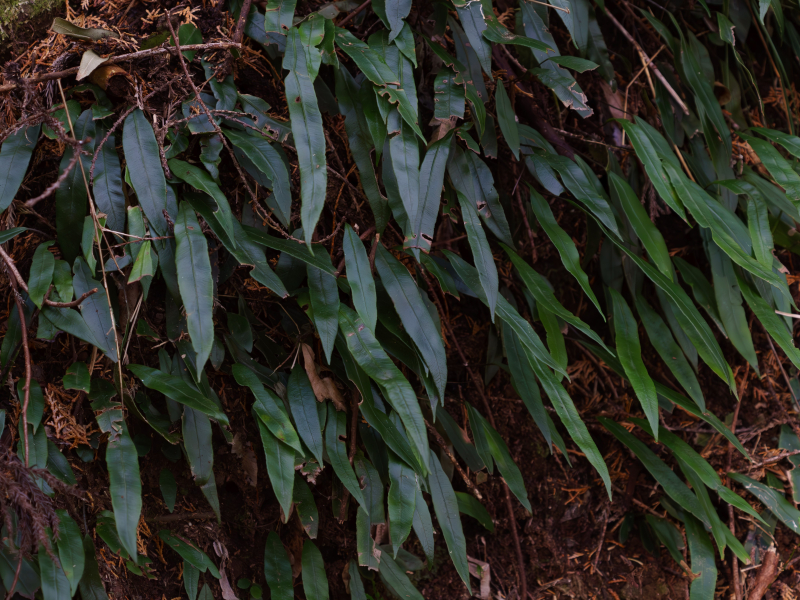
"Herashida (ヘラシダ)" plants are found in the Japanese cypress woodland. They are the evergreen fern plants that grow on the moist cliffs in forests. Their linear-shaped sori are on the back of their leaves. Their leaves are undivided and simple. The name comes from the fact that their leaves look like a spatula.

2025.02.28

マメヅタ

 桜の樹皮上でマメヅタが見られます。シダらしくない丸い葉が特徴の常緑のシダ植物です。胞子をつける葉(胞子葉)は普通の葉(栄養葉)と異なり、細長い形をしています。胞子のう群は反り返った胞子葉の裏面全体に広がっています。
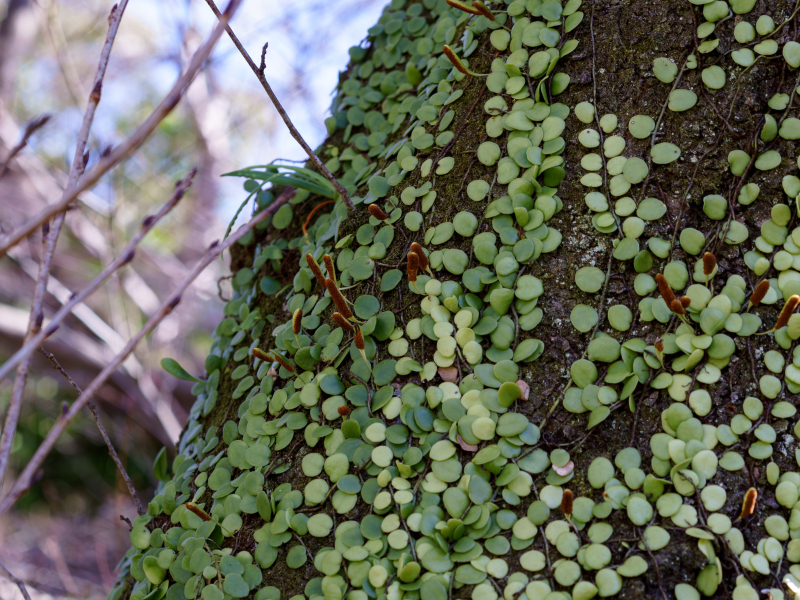
"Mamezuta (マメヅタ)" plants can be found on the cherry blossom tree. They are evergreen fern plants with rounded leaves that don't resemble typical ferns. The leaves that produce spores, known as "fertile fronds", differ from those that don't, called sterile fronds, as the former are long and narrow. The sori covers the back of the fertile fronds.

2025.02.14

オオバノイノモトソウ

 ヒノキ林にオオバノイノモトソウが見られます。日の当たる石垣から樹林内まで広く分布するシダ植物です。胞子のう群は羽片の縁につきます。和名は近縁種のイノモトソウに比べて大型なことに由来します。

"Oobano-Inomotosou (オオバノイノモトソウ)" fern plants are found in the Japanese cypress woodland. They grow widely, from sunlit stone walls to forests. They bear their sori along the edges of their pinnae. The name comes from the fact that they are larger than the relative species called "Inomotosou (イノモトソウ)".

2025.02.11

コシダ

 ヒノキ林でコシダが見られます。日当たりのよい崖地や林床などに生えるシダ植物です。葉は数回二叉に分枝しながら成長していきます。和名は小シダの意味で、同じ科のウラジロに比べて小さいことに由来するようです。

"Koshida (コシダ)" fern plants are found in the Japanese cypress woodland. They grow on sunny cliffs and forest floors. The leaves repeatedly branch in two ways. The name itself means a small fern plant, which comes from the fact that they are smaller than "Urajiro (ウラジロ)," another fern plant belonging to the same family.

2025.02.07

イノデ

 ヒノキ林でイノデが見られます。全長1m以上にもなる大型のシダ植物です。イノデは近縁種が多く、また雑種もつくりやすいため、同定が難しい仲間です。葉柄にある鱗片や胞子のう群のつく位置などが見分けるポイントになります。


"Inode (イノデ)" fern plants are found in the Japanese cypress woodland. They are the large fern plants that grow up to 1m long. The plants in the Inode group are difficult to be identified because they have many closely related species and their hybrids are easily produced. The keys for identification are the scales on their leaf stalk and the area that their sori are located on.

2025.01.31

オオキジノオ

 ヒノキ林の林縁でオオキジノオが見られます。暖地の林内に生えるシダ植物です。近縁のキジノオシダとよく似ていますが、やや大型になり、栄養葉の羽片に柄があることで区別できます。


"Oo-Kijinoo (オオキジノオ)" fern plants are found on the edge of the Japanese cypress woodland. They are a fern plant that grows in the forests in warm climates. They look like the relative species called "Kijinoo-Shida", but they grow larger and their pinnae of sterile fronds have stalks.

2025.01.28

キジノオシダ

 ヒノキ林の林縁でキジノオシダが見られます。暖地の林内に生えるシダ植物です。胞子をつける葉(胞子葉)とつけない葉(栄養葉)で形が異なっており、写真は栄養葉です。和名は、葉の形をキジの尾羽に見立てたものです。

"Kijinoo-Shida (キジノオシダ)" fern plants are found on the edge of the Japanese cypress woodland. They are a fern plant that grows in the forests in warm climates. There are two types of leaves in shape. One that bears spores, which are called fertile fronds, and the others that don't bear spores, which are called sterile fronds. The one in the photo is a sterile frond. The name comes from the shape of its fronds, which resemble a pheasant’s tail feathers.

2025.01.24

クリハラン

 ヒノキ林の林縁でクリハランが見られます。樹林内の湿った岩上や林床に生えるシダ植物です。葉は切れ込みがなく、シダらしくありません。和名は葉の形がクリの葉の形に似ていることに由来します。


"Kuriharan (クリハラン)" fern plants are found on the edge of the Japanese cypress woodland. They are the fern plants that grow on the moist rocks in the forest or the forest floor. The leaves are unbroken so they don't look like fern plants. The name comes from the fact that their leaves look like the ones of chestnut trees.

2025.01.21

イワガネゼンマイ

ヒノキ林の林縁でイワガネゼンマイが見られます。大型のシダ植物です。前回紹介したイワガネソウと近縁で、見た目もよく似ています。羽片の先が急にとがることや、羽片の脈が編目状にならないことが特徴です。


"Iwagane Zenmai (イワガネゼンマイ)" fern plants are found on the edge of the Japanese cypress woodland. They are a large fern plant. They are a relative species to the "Iwaganesou," which I posted in my last diary and they look alike.  "Iwagane Zenmai" fern plants are characterized by the abrupt pointiness of the tips of the feather fragments and also by the fact that the veins of the feather fragments do not form a braided pattern.

2025.01.17

イワガネソウ

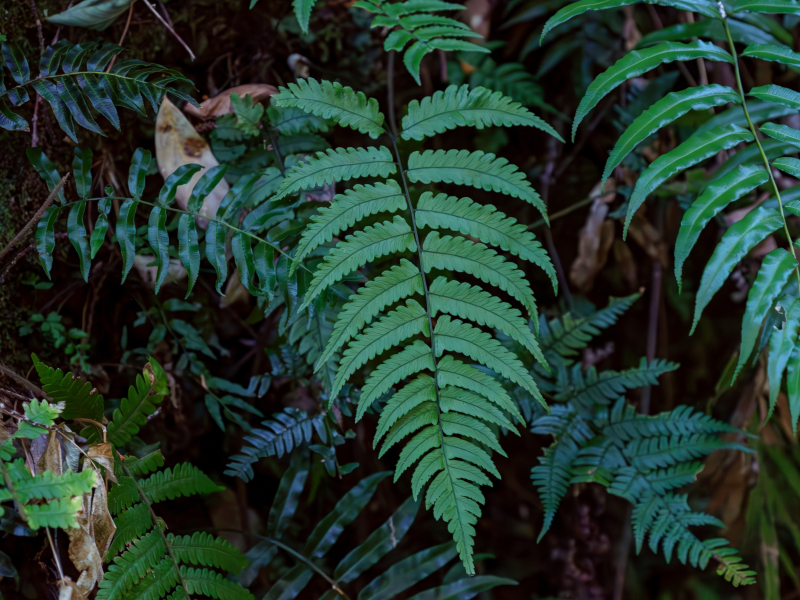
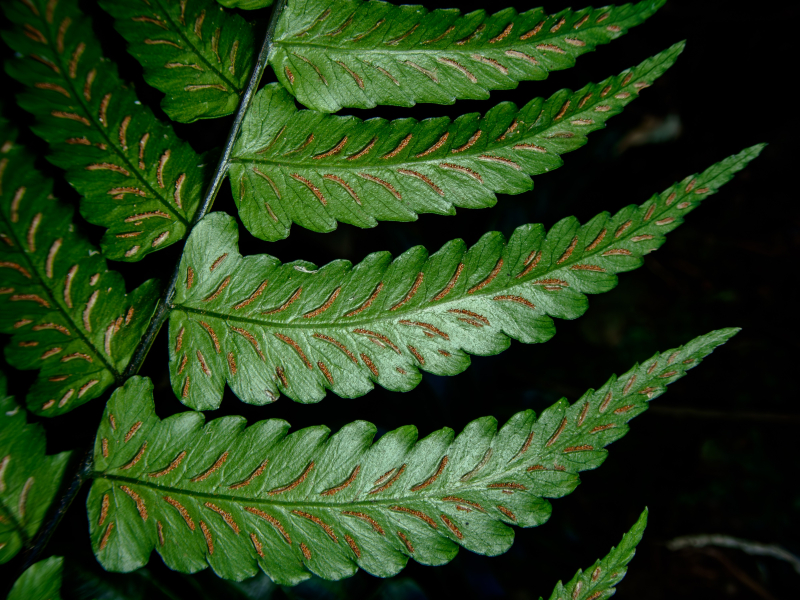
 ヒノキ林の林床でイワガネソウが見られます。大型のシダ植物で、光沢のある深緑の葉が特徴です。胞子のう群は葉脈に沿ってつきます。和名は岩が根草で、岩の根元などに生えることに由来するようです。


"Iwaganesou (イワガネソウ)" fern plants are found in the Japanese cypress woodland. They are the large fern plants that have shiny deep green leaves. They bear the sori along their leaf veins. The name comes from the fact that they grow around rocks.