フィールド日記

シダ植物
2025.01.03
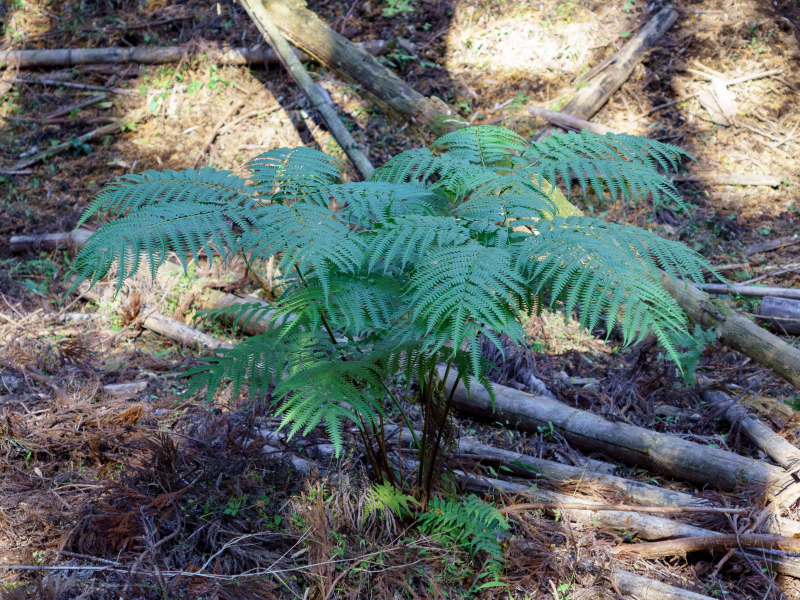
ナチシダ
ナチシダが見られます。常緑の大型のシダ植物で、葉は五角形に広がります。暖地性のシダで、静岡県河津町の自生地は1953年に自生北限地として国の天然記念物に指定されています。現在ではより北の自生地も知られており、キャンパス内でも徐々に個体数が増えているように思います。
2024.12.31
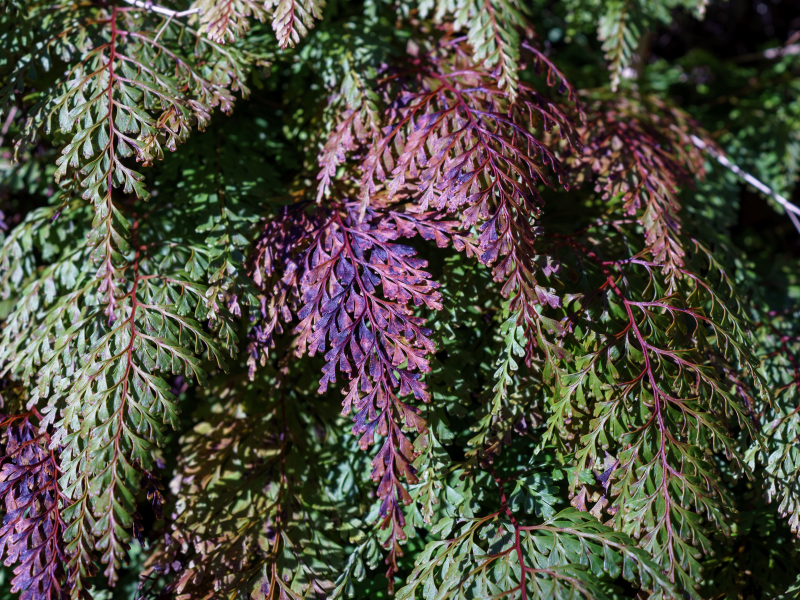
ホラシノブ
ホラシノブが紅葉しています。明るい崖地に見られる常緑のシダ植物です。葉を密につけ、冬には葉が紅葉することが知られています。胞子のう群は葉の先端につきます。
2024.01.19
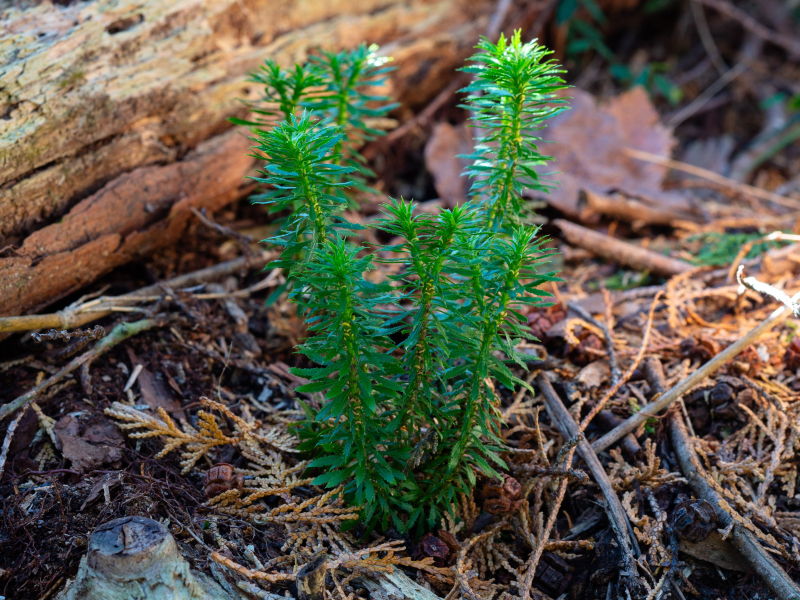
トウゲシバ
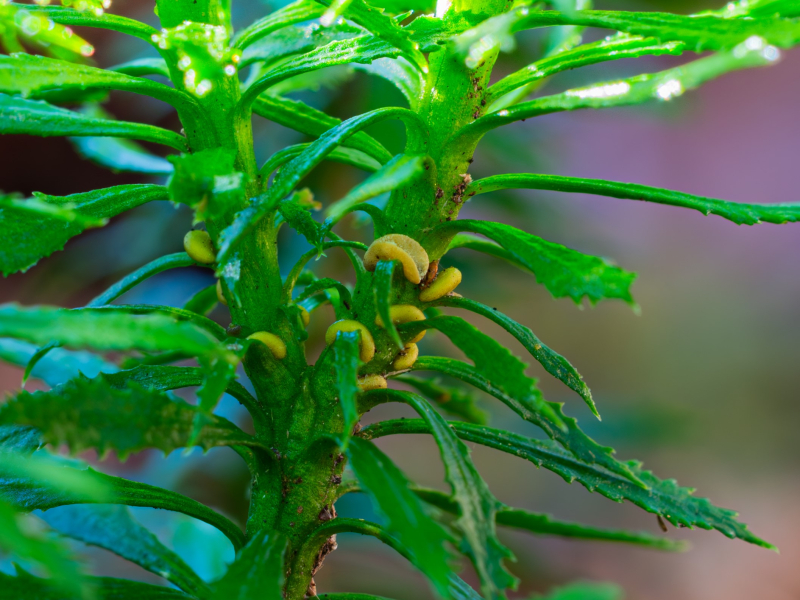
トウゲシバが胞子のうをつけています。山地の湿った樹林内に生えるシダ植物で、腎臓型の黄色い胞子のうを葉のつけ根に一つずつつけます。葉の形や大きさには変化があり、変種として区別することもあります。
2023.01.03
ヒメノキシノブ
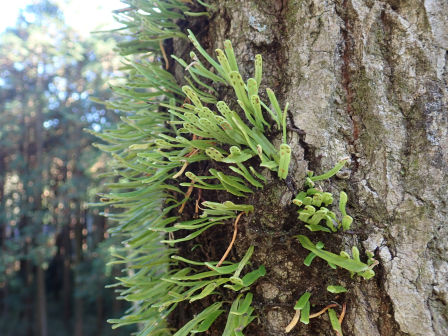
クヌギ林でヒメノキシノブが見られます。樹幹や岩上に見られるシダ植物です。近縁のノキシノブに比べて葉が短く、先端が丸いことが特徴です。葉の裏には丸い胞子のう群が見られます。キャンパス内では、ノキシノブに比べて個体数はとても少ないです。
2022.10.18
フユノハナワラビ
中学校舎の中庭にフユノハナワラビが胞子をつけていました。名前の通り秋から冬にかけて葉を広げ、胞子を飛ばすシダ植物です。シダ植物は葉の裏面に胞子をつけるものが多いですが、フユノハナワラビは、胞子嚢をつける胞子葉と、光合成をする栄養葉に分かれています。和名のハナとは、写真の中央の、黄色い胞子嚢を多数つけた胞子葉を花に見立てたものです。
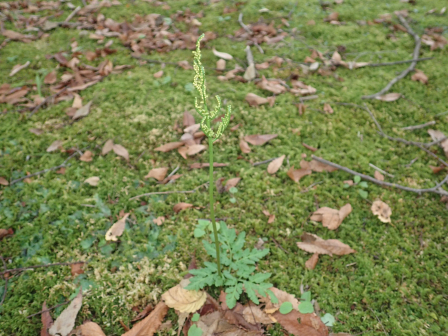
I found "Fuyuno-Hana-Warabi (フユノハナワラビ)" fern plants bearing spores. As the name suggests, they are fern plants that spread spores in winter with their leaves growing. Many fern plants have spores on the back of their leaves, but this fern has the fertile leaves that produce spores and the sterile leaves that carry out photosynthesis. The word "Hana (ハナ)" in their name means "flower" and comes from their fertile leaves looking like a flower.
2022.04.05
ウラジロ
ヒノキ林の林床で、ウラジロの休止芽が伸びだしていました。ウラジロは地下茎から一対の羽片をもつ葉が伸びてきます。羽片の中央には芽がありますが、いったん成長を止めることから休止芽と呼ばれます。休止芽は翌年の春に伸びて、新たな一対の羽片と休止芽をつけます。このように毎年1段ずつ成長していくので、2m以上になるものもあります。ウラジロは縁起がよい植物としてお正月の飾りに使われます。
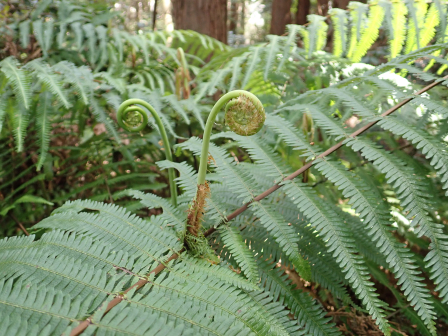
A resting bud of "Urajiro (ウラジロ)" fern plants is starting to grow on the Japanese cypress woodland floor. They grow from an underground stem with a pair of pinnate leaves. There is a bud at the center of the pair of pinnate leaves, but the bud stop growing once. this is why the bud is called "resting bud". The resting bud starts to grow in the next spring and produce a new pair of pinnate leaves and a new resting bud again. As they grow step by step every year, their leaves can grow up to more than 2 meter in length. They are regarded as lucky plants, so they are used for the ornaments for the New Year's Day.
2021.11.23
カニクサ
カニクサが胞子をつけていました。シダ植物のなかまでは珍しくつる性です。茎が他の植物に巻き付きながら成長して葉を出しているように見えますが、実際は、地上に出た1枚の葉がつる状になって成長を続けています。
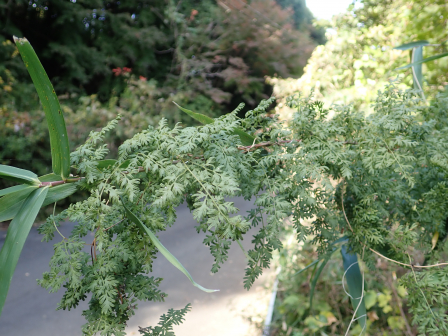
I found "Kanikusa" fern plants bearing spores. They are unique in that they are a vine plant even though they are a fern plant. It seems as if their stems grew winding other plants and sending out leaves. However, actually, one leaf, which looks like a stem, comes out from the ground growing like a vine.
2021.02.12
キジノオシダ
ヒノキ林の林床でキジノオシダを見つけました。暖地に生えるシダ植物です。先日紹介した近縁のオオキジノオととても良く似ています(オオキジノオの記事はこちら)。
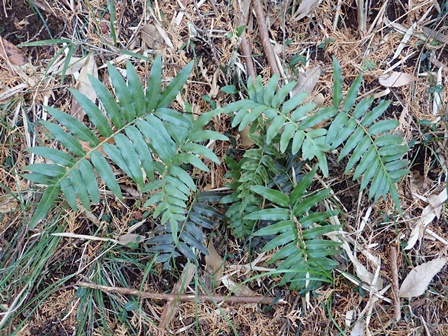
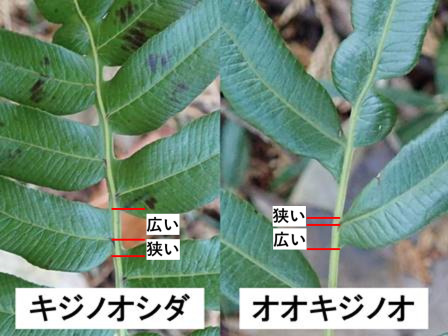
葉の先端付近の羽片の軸にくっついている部分を見ることで両者を見分けることができます。下の写真のようにキジノオシダは羽片の上側が広く軸につくのに対し、オオキジノオは羽片の下側が広く軸につきます。
I found a fern called "Kijinoo-Shida (キジノオシダ)" on the Japanese cypress woodland floor. They are a fern plant that grows in warm climate. They are similar to a close-related fern called "Oo-Kijinoo (オオキジノオ)", which I posted the other day (Click here to read the article).
You can distinguish between the two by looking at where the pinna connects to the axis. The upper part of the pinna of "Kijinoo-Shida (キジノオシダ)" is wider at this point. In the case of "Oo-Kijinoo (オオキジノオ)" it is the lower part of the pinna that is wider where it connects to the axis.
2021.01.26
オオキジノオ
ヒノキ林の林床にオオキジノオが生えています。暖地の林内に生えるシダ植物で、北限に近い東京や神奈川では絶滅危惧種に指定されています。和名は葉の形がキジの尾羽に似ていることに由来するようです。
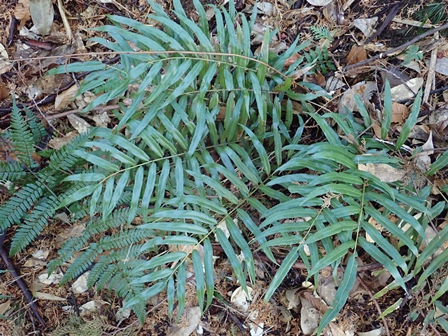
近縁種のキジノオシダによく似ていますが、羽片に柄があることで区別することができます。
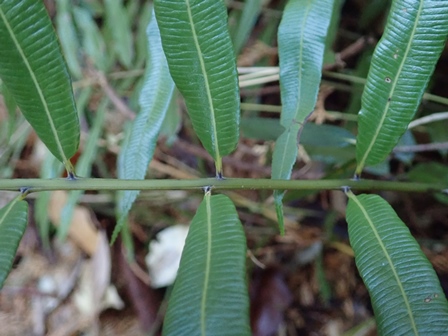
I found a fern called "Oo-Kijinoo (オオキジノオ)" on the Japanese cypress woodland floor. They are a fern plant that grows in warm climate. They are designated as endangered species in the areas near the northern limit like Kanagawa and Tokyo. "Kijinoo (キジノオ)" in its name means "feathers pheasant's tail" and it comes from the shape of their leaves.
They are similar to their close relative species called "Kijinoo-Shida (キジノオシダ)", but you can identify them by the fact that the pinna of "Oo-Kijinoo (オオキジノオ)" has a stalk.
2021.01.22
コシダ
聖心坂の近くの森の中でコシダを見つけました。葉の軸の先端に芽があり、二叉に分枝を繰り返しながら成長するという特徴があります。硬く、つるつるした葉の軸は、編みかごの材料として使われていたようです。
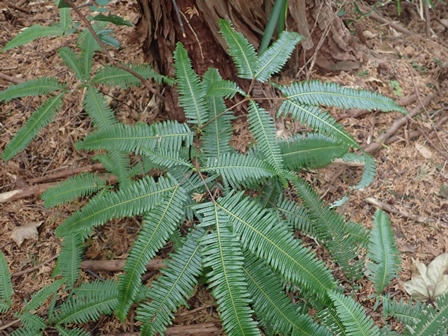
I found a fern called "Koshida (コシダ)" in a forest near the "Seishin Zaka(聖心坂)". They have a shoot at the end of their leaf axis and grow dichotomous branches repeatedly. The leaf axes are smooth and tough, so people used them to make wicker baskets.